


Winter Pool Enclosure Lighting Ideas for a Cosy Evening Swim
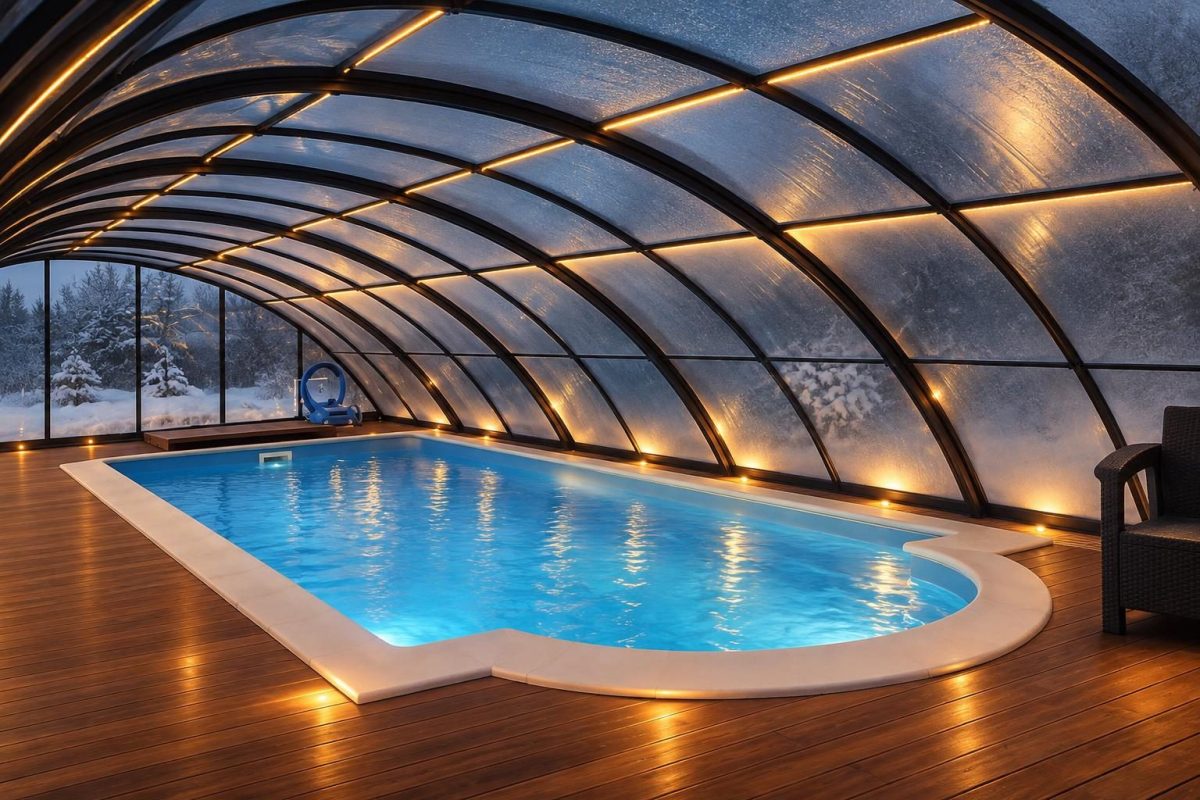
Snow outside can look beautiful until bright ceiling lights turn your pool glazing into a mirror. The most comfortable winter pool enclosure lighting ideas create the season through gentle light and visible outdoor scenery, rather than colder air or water. You want enough light to swim safely, a clear route to a dry seat and a view that still feels connected to the evening beyond the glass.
Start with what you can see from the water, not how the enclosure looks from the doorway. A lamp that seems pleasantly bright while you are standing may shine straight into your eyes when you swim towards it. A decorative reflection can also conceal the edge of a step. Soft lighting works best when it reduces those distractions without leaving important surfaces in shadow.
Read the poolside space before changing the lighting
Visit your pool enclosure after dark with its usual lights switched on. Look from the entrance, from your normal seating position and from water level, where you can do so safely. These viewpoints reveal different problems: reflections in the glazing, exposed lamps overhead and dark patches along the route back to your towel.
Glass and water both reflect light. When a bright indoor fitting faces a dark window, its reflection can become more noticeable than the garden beyond. Moving water breaks reflected light into shifting patches, which may feel lively at first but become tiring during a quiet swim.
Reduce distracting brightness before adding decorative effects. An extra string of lights rarely fixes glare from an exposed ceiling fitting.
Notice the shape of the enclosure too. A low glazed roof can place reflections directly above a swimmer, while a taller space may offer solid walls or structural beams that can receive softer light. Different pool enclosure layouts provide different opportunities for positioning lights away from direct sightlines. Do not assume an arrangement photographed in a large pool room will behave the same way beneath a compact glazed roof.
Choose warm-looking light without making the pool orange
Colour temperature describes how warm or cool white light looks, not how much heat the lamp produces. Warm white resembles the gentle light of a shaded domestic lamp; cool white looks crisper and can feel closer to daylight. The colour temperature is usually shown in kelvin, written as K.
For seating areas, warm white light around 2,700–3,000 K is a useful starting point. It tends to suit timber, muted upholstery and the slower pace of an evening swim. Your pool finish will affect the result: pale stone, blue tiles and dark liners all reflect light differently.
Keep the water visually clear. Strong amber or saturated blue lighting may create a dramatic photograph, but it can alter how steps, depth changes and objects beneath the surface appear. A restrained approach is easier on your eyes: warm light around the resting area, with suitable pool lighting that preserves visibility in the water.
You do not need every fitting to produce exactly the same shade of white. Abrupt contrasts are the greater problem. A very cool overhead lamp beside a softly lit lounger can make the seating area feel disconnected from the pool, so assess adjacent lights together rather than choosing each one in isolation.
Put softer light beside you, not in your eyes
An exposed bright lamp draws your attention because it stands out against its surroundings. Near water, you may see both the lamp and its reflection, effectively repeating the distraction. Shielding the light source allows you to see the illuminated surface without staring at the bright point that lights it.
Prefer a softly lit wall to a visible bare lamp.
Let suitable solid surfaces carry the glow
Indirect lighting means light that reaches you after bouncing off another surface, rather than shining straight from a lamp into your eyes. Think of a lamp aimed at a wall instead of your face. A suitable wall or roof surface can spread the light over a wider area and make the change between bright and dim parts of the enclosure feel gentler.
This works only where the structure provides a useful surface. Aiming a light at clear glazing may produce another reflection rather than a soft glow. Dark timber may absorb much of the light, while a pale matt wall will usually reflect more of it. Test the effect before committing to a permanent installation.
Keep steps, edges and the route to your seat readable
The quietest-looking area should not be the place where you need to judge a wet step. Pool edges, handrails, level changes and access routes need reliable illumination, even when decorative lighting is dimmed. Low-positioned fittings can help reveal a route, but poor placement can send light across the water or directly towards someone seated nearby.
Any change to fixed lights, underwater fittings, wiring or controls needs assessment by a qualified electrician familiar with swimming pool installations. Pool areas have specific electrical zones, meaning areas where equipment and installation requirements differ according to their position near the water. A fitting labelled for outdoor use is not automatically suitable for every poolside location.
Snowy views, projected patterns or a quiet winter backdrop?
A winter effect is convincing when you can enjoy it without constantly noticing the equipment behind it. Real scenery needs little decoration, but it must remain visible after dark. A projector creates its own scene, although moving patterns can compete with reflections from the pool.
| Winter effect | Atmosphere and comfort | Practical limitation |
|---|---|---|
| Snow or bare branches seen through glazing | A natural backdrop that leaves the poolside visually calm | The view may disappear when the interior is much brighter than outdoors |
| Gentle illumination of an outdoor feature | Gives your eyes something to settle on beyond the glass | Needs appropriate installation and careful aiming to avoid glare, light spill and disturbance to wildlife |
| A static winter pattern on a solid wall | Suggests frost or branches without constant movement | Requires suitable equipment and a surface that does not redirect the image into the water |
| Moving projected snow | Creates an obvious seasonal effect | Movement may distract swimmers and appear confusing when reflected in glazing |
When reflections already dominate the room, my preference is a real view or a still, softly illuminated surface. Moving snow adds another layer of visual activity to water that is already moving.
A snowy garden cannot be relied on throughout winter. Bare branches, evergreen planting or a textured boundary can provide a quieter backdrop when there is no snow. Outdoor lighting should remain restrained and be directed only where it is needed, rather than flooding the garden to compete with an overly bright interior.
Keep the winter feeling separate from water and air temperature
Warm-looking light changes your impression of the space; it does not warm the water or prevent you feeling chilled after a swim. That transition depends on the actual pool conditions, air movement, the distance to your seat and whether your towel is dry and within reach.
Keep your established operating settings while you test decorative changes. Decisions about pool heating should reflect the pool, its use and the enclosure’s environmental control arrangements, rather than a desire to make a winter scene feel more authentic. Lowering temperatures for atmosphere can turn an unhurried evening into a quick dash for a towel.
Steamy windows can spoil the view even when the lighting is well judged. Condensation is moisture collecting on a cool surface, like droplets on a bathroom mirror. In an enclosure, its extent is influenced by the moisture in the air, surface temperatures and how the air is managed.
Dimming a lamp will not remove that moisture. Nor should you cover ventilation grilles to hide them or close necessary air paths to make a seating corner feel snug. Persistent condensation, uncomfortable draughts or damp finishes need assessment of the ventilation and moisture-control arrangements, not another decorative layer.
Make the lounger area inviting without creating damp clutter
A softly lit seat feels welcoming when you can reach it without crossing a cold, wet patch and sit down without moving a pile of damp cushions. Position your resting area outside the main splash zone, with a stable place for a towel that does not narrow the walking route.
Texture can suggest winter warmth without filling the enclosure with fabric. A suitable timber-look surface, a muted cushion designed for the environment or a neatly stored dry towel can soften the scene. Loose throws are unsuitable where splashes keep them wet, and absorbent rugs can retain moisture or move underfoot.
Use lighting to identify the dry resting area rather than scattering decorative objects around it. A gentle pool of light across a nearby wall can make the seat easy to find while leaving the walking route clear. Avoid arrangements that require trailing leads or extension cables near the pool.
Real candles are a poor choice beside towels, clothing and narrow routes. Battery-powered alternatives still need to be suitable for their location, kept securely away from the water and used according to their instructions. A battery removes the mains lead; it does not make an object waterproof.
Separate the evening mood from the cleaning light
Gentle lighting can make a room feel calmer partly because minor surface detail becomes less noticeable. That same effect is unhelpful when you are checking the floor for debris or inspecting a step. Keep a brighter, practical lighting setting for cleaning, maintenance and checks before swimming.
If your existing installation has separate controls, use them to distinguish the seating area from the pool and access routes. Dimmers must be compatible with the lamps and control equipment; unsuitable combinations can cause flickering or unreliable operation. Ask a qualified electrician to assess changes rather than fitting a general-purpose dimmer to a pool circuit.
Never dim the pool until the bottom, steps or anyone in the water becomes difficult to see. Decorative calm has to work around safe visibility, including for a person supervising from the poolside.
Test one evening view before changing another light
Choose a normal winter evening, with the enclosure operating as it usually would. Test from the lounger and a safe poolside position first. If you then check the view while swimming, have another adult present to help assess visibility from outside the water.
- Switch on the lights needed to see the pool, steps and access routes clearly.
- Reduce one non-essential source of brightness using its existing, suitable controls.
- Look towards the glazing. Check whether the outdoor scene becomes clearer or a different reflection simply takes over.
- Check the resting area for direct glare at seated eye level, then confirm that the route to it remains easy to see.
- Restore the brighter setting and compare. Keep the softer arrangement only if swimmer visibility and movement around the pool remain clear.
Start with the window nearest your favourite seat. If you can see the winter scene instead of a bright reflection of the room, without losing sight of the pool edge, that single adjustment has earned its place.