


How to Prevent Condensation in a Pool Enclosure During Winter
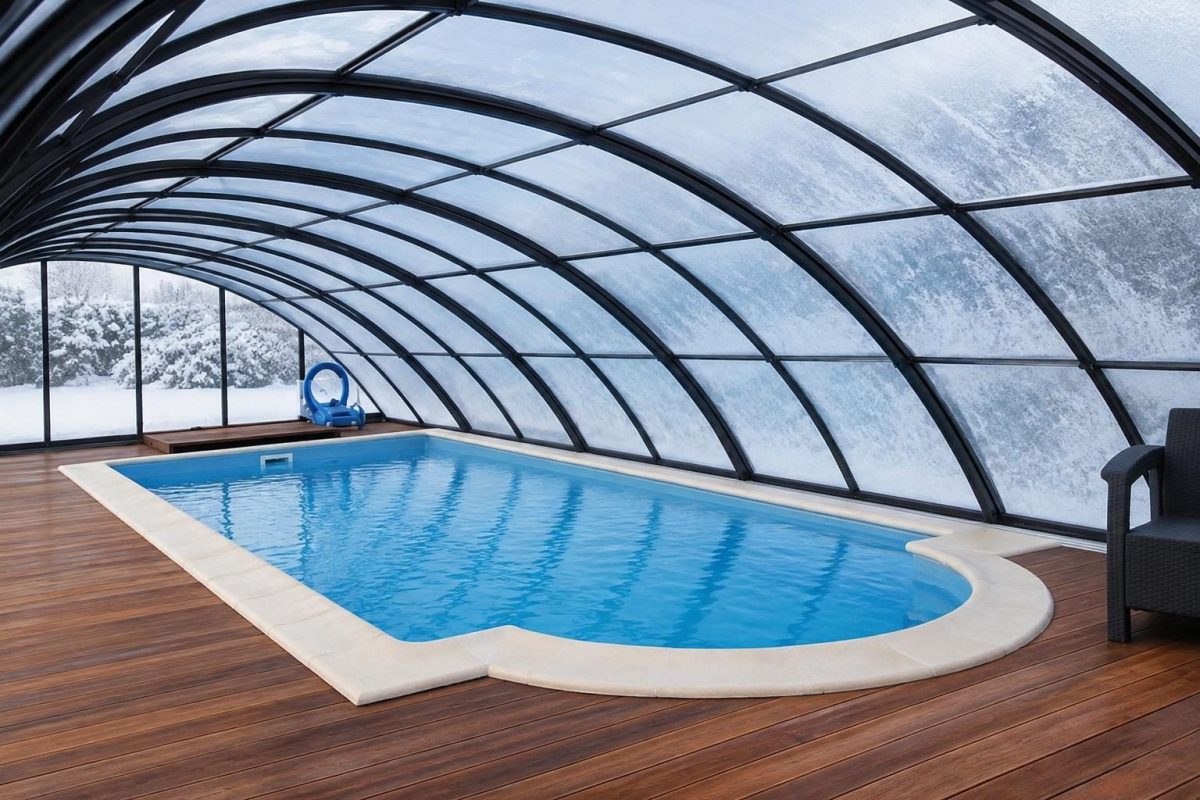
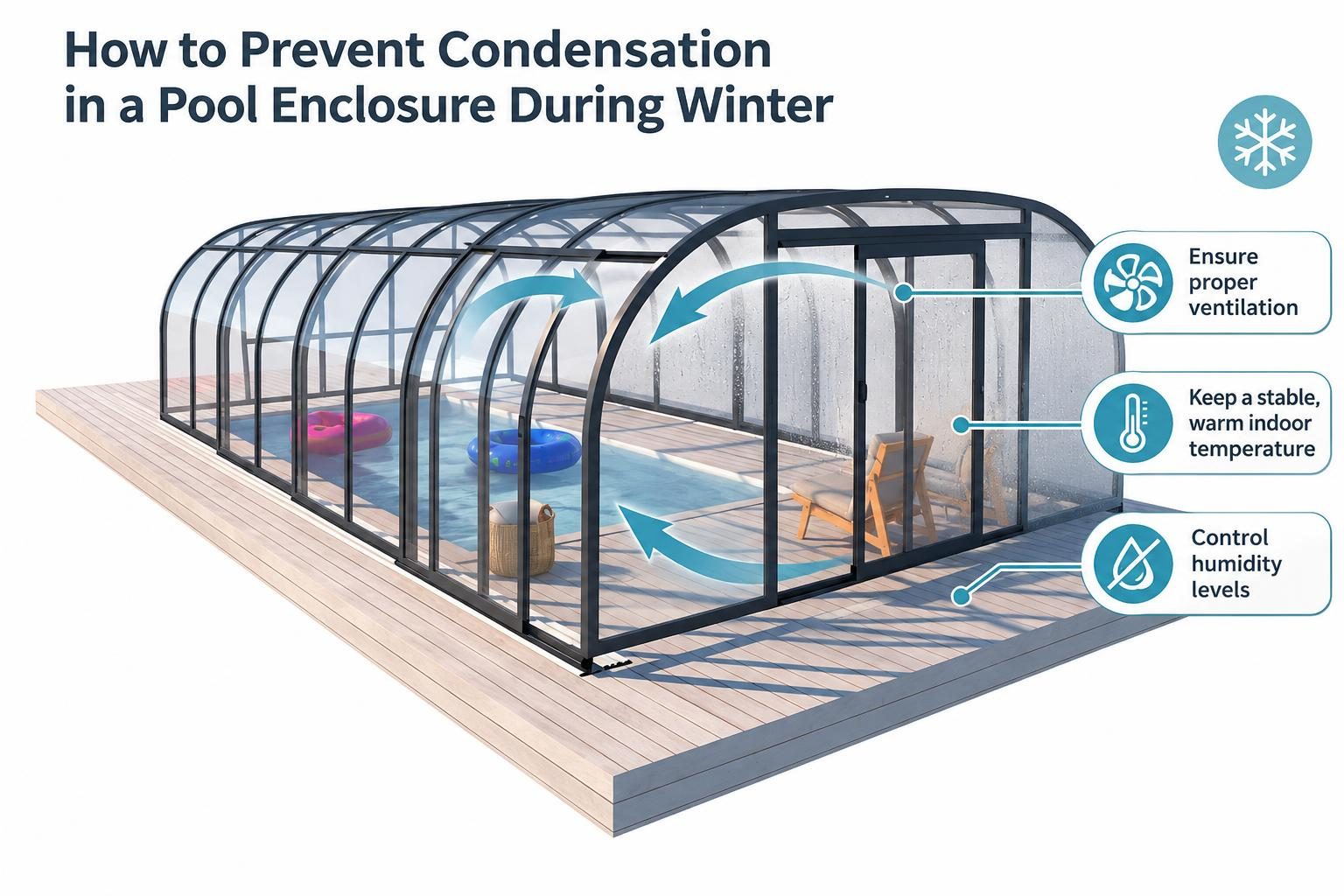
To prevent condensation in a pool enclosure during winter, you need to limit evaporation, remove excess moisture and keep vulnerable surfaces warm enough. Winter atmosphere should come from a snowy view, gentle lighting and a dry lounger, rather than colder air around your wet shoulders. Clear glazing helps you enjoy that view, but turning up the heating alone will not necessarily keep it clear.
Steamy windows, dripping roof panels and damp seat cushions usually point to a mismatch between the moisture entering the air and the enclosure’s ability to manage it. Start with where the water appears. A little mist on a cold morning calls for a different response from droplets falling onto your seating area every evening.
What steamy windows reveal about your enclosure
Condensation is moisture collecting on a cool surface, like droplets on a bathroom mirror. Your pool releases water vapour into the air through evaporation. When that moist air reaches glazing, roof panels or metal frames that are cold enough, some of the vapour turns back into liquid water.
The temperature at which this happens is called the dew point. Think of it as the surface-temperature limit below which moisture starts appearing. More moisture in the air raises that limit, so a window does not have to be quite as cold before it becomes wet.
Winter makes the problem more visible because outside conditions cool the enclosure’s surfaces. The room can feel pleasantly warm while the inside face of a window remains cold enough to collect droplets. A thermostat reading therefore cannot tell you whether the glazing will stay dry.
Look at the pattern before changing any settings. Mist across most panes suggests a broader moisture or surface-temperature problem. One persistently wet frame may indicate a local cold spot or poor airflow. Moisture trapped between the panes of a sealed double-glazed unit usually points to a glazing-seal problem rather than humidity inside the pool space.
First establish whether you have a pool room or a weather shelter
A permanently enclosed, heated pool room can control air temperature and moisture throughout winter. A lightweight telescopic enclosure may mainly shelter the pool from wind and rain, with much less insulation and no dedicated humidity control. Those spaces will not behave in the same way.
With an unheated or lightly heated enclosure, warm pool water beneath cold panels can produce substantial condensation. Some seasonal misting may be unavoidable without changes to the enclosure or its environmental controls. Trying to make every panel perfectly clear by continually increasing the water temperature can make evaporation worse.
The construction of pool enclosures affects what you can realistically achieve: glazing, frame design, seals, insulation and ventilation provision all influence winter conditions. Check what your structure was designed to do before treating it as a year-round indoor room.
A cover and sensible operating habits can reduce moisture, but they cannot give a lightweight shelter the performance of an insulated pool building.
Reduce evaporation before asking equipment to work harder
The pool surface is usually the main source of moisture. Warmer water, moving water and swimmers disturbing the surface all encourage evaporation. An uncovered pool can continue adding moisture to the enclosure long after everyone has gone indoors.
A correctly fitted pool cover provides a physical barrier between the water and the room air. Covering the pool when it is not in use is therefore one of the most useful first steps, provided the cover is suitable for your pool and used according to its instructions.
Deal with smaller moisture sources too. Puddles on the pool surround, soaked towels and wet lounger cushions all release water as they dry. Clear standing water towards the intended drainage points and move wet textiles to a suitable drying area rather than leaving them beside the pool overnight.
Waterfalls, fountains and vigorous water features increase the exposed and disturbed water surface. Switch them off when they are not being enjoyed, unless they are required for the pool’s specified operation. Keep circulation and treatment equipment running to its required schedule; it is decorative water movement you are reducing, not essential water management.
Do not use hotter water to compensate for a chilly room
A warmer pool may feel inviting on entry, but it can also increase evaporation and the moisture load on the enclosure. It will not correct a cold draught across the seating area or a poorly positioned air outlet.
Assess the water and room conditions together. The suitability of your pool heating arrangements affects water-temperature stability, but heating the water and removing airborne moisture remain different jobs. Changes to operating temperatures should suit the pool’s use, the enclosure and the capacity of its environmental equipment.
Measure humidity rather than judging by warmth
Relative humidity describes how much water vapour is in the air compared with the amount it could hold at that temperature. A reading of 60% does not mean the room is 60% water; it describes how close the air is to becoming saturated under those conditions.
A humidity meter, also called a hygrometer, gives you a more useful starting point than whether the room feels stuffy. Use one suitable for the environment and position it away from direct splashes, sunlight, doors and supply-air outlets. Follow its placement instructions so that it measures representative room air.
For many purpose-built indoor pool rooms, a commonly used relative-humidity range is around 50–60%. That is a reference range, not a guarantee against condensation: very cold glazing can still become wet within it. Your enclosure’s design and equipment requirements should determine its actual operating target.
Record air temperature and humidity before swimming, after swimming and the next morning. Note whether the cover was on and whether the weather was especially cold. A repeated pattern is more informative than a single reading taken just after opening a door.
Ventilation and dehumidification do different jobs
Ventilation replaces some indoor air with outdoor air. Dehumidification removes moisture from the air, usually by collecting water inside dedicated equipment. A pool room may need both, because moisture control and fresh-air provision are related but separate requirements.
Cold outdoor air often contains less water vapour than warm pool-room air, even when the weather feels damp. Once brought inside and heated, it can help carry moisture away. However, uncontrolled window opening also loses heat and may create uncomfortable draughts over wet skin.
Prefer the enclosure’s designed ventilation arrangements to leaving a door ajar all evening. Do not block grilles to make a lounger feel warmer, and do not turn off a required ventilation system because its fan is audible. Both actions can leave moisture and airborne pool contaminants accumulating indoors.
A dehumidifier must be suitable for the pool environment and sized for the actual moisture load. Pool area, water temperature, activity, cover use and enclosure conditions all affect that load. A domestic unit intended for a spare bedroom should not be assumed suitable for a warm, chemically treated pool atmosphere.
Equipment selection, electrical installation, condensate drainage and ventilation changes need qualified assessment. Keep portable electrical equipment away from poolside wet areas; an extension lead beside a lounger is not a safe shortcut to humidity control.
Check simple faults without changing the design
If an existing system used to keep the enclosure drier, look for an operational change before assuming it needs replacing. A cover may have stopped being used, operating hours may have been shortened, or accessible filters may need maintenance under the manufacturer’s instructions.
Check for visible fault messages and blocked external grilles from a safe position. Leave electrical panels, refrigerant components and duct alterations alone. A unit that runs continuously while humidity keeps rising needs assessment rather than repeated thermostat adjustments.
Why warm air still leaves cold windows wet
Room heating warms the air, but that heat does not reach every surface equally. Frames, roof edges and structural connections may lose heat faster than the surrounding panels. These colder areas are sometimes called thermal bridges: routes through which heat escapes more readily, rather like a thin patch in a winter coat.
In a purpose-designed pool room, air may be directed across glazing to help keep its inner surface warmer and carry moist air away. A chair, tall planter or decorative screen placed in that airflow can create a damp patch behind it even when the rest of the room seems comfortable.
Keep intended air paths clear. Do not redirect outlets yourself or point an ordinary portable fan across the water as a substitute for designed air distribution. Air moving rapidly over the pool surface can increase evaporation, while a draught across your exit route makes leaving the water unpleasant.
Persistent dripping from one roof junction, staining around a frame or moisture appearing mainly after rain also deserves a building check. Rain penetration and condensation can occur together. Wiping the surface will not establish which one is responsible.
Keep the winter view without creating a damp seating corner
A lounger pressed against cold glazing puts cushions close to the surface most likely to become wet. Leave space for the intended airflow and position seating outside drip lines and splash zones. Choose furnishings intended for humid pool environments, with surfaces you can inspect and dry.
Loose throws and thick absorbent cushions are poor choices where splashes keep them wet. Keep dry towels in a protected place and bring them out when needed. Comfort is the short, unhurried walk from the pool to a genuinely dry seat, not a pile of fabric holding yesterday’s moisture.
Lighting changes how clearly you notice both the view and the droplets. Bright fittings reflected in dark glazing can turn a snowy garden into a mirror image of the room. Light scattered by misted panes makes that reflection more distracting.
Reduce the glare, not the safe visibility.
Use suitable lighting controls to soften decorative lighting while maintaining clear illumination at steps, pool edges and walking routes. Warm-white light describes the warmer appearance of the light, not heat produced by the lamp. It can give the seating area a gentler feel without changing the air or water temperature.
Any new fittings or electrical alterations must be suitable for their poolside location and installed under the applicable requirements. Avoid candles, trailing decorative light cables and ornaments placed over ventilation outlets. Keep the seasonal effect away from the systems that keep the room dry.
Recognise when wiping the glass is no longer enough
A brief film of mist during exceptional cold may clear as conditions recover. Daily roof drips, persistent puddles, mould, corrosion or damp spreading into adjoining rooms need investigation. These signs suggest that moisture is reaching surfaces or spaces that should not remain wet.
Clean accessible condensation using safe access and materials recommended for the glazing or frame finish. Do not climb onto pool furniture or reach over the water to wipe overhead panels. Avoid abrasive cleaning that could damage protective coatings.
Musty smells, irritated eyes or a strong chemical smell should not be treated as decorative inconveniences. Air quality and pool-water chemistry may both need checking. Do not try to hide the smell with fragrances or alter chemical dosing without appropriate testing and guidance.
Run one covered-pool check before your next evening swim
Choose a period when the enclosure can operate normally, without changing several settings at once. This check can reveal a useful pattern, although different outdoor weather conditions mean it is not a controlled performance test.
- Record the air temperature and relative humidity at your usual measuring point, and note the water temperature.
- Dry accessible wet surfaces, remove soaked textiles and fit the pool cover correctly.
- Leave the required heating, ventilation and humidity controls operating at their approved settings.
- Before the next swim, record the readings again and look at the same panes, frames and seating area.
- Note whether moisture is widespread, confined to a cold edge or appearing despite a lower humidity reading.
If humidity falls but one frame stays wet, that local surface or its airflow deserves attention. If humidity remains high throughout the enclosure, check cover use and the moisture-control system’s operation. Keep those observations with your readings so that any further assessment starts with the conditions you actually experience.